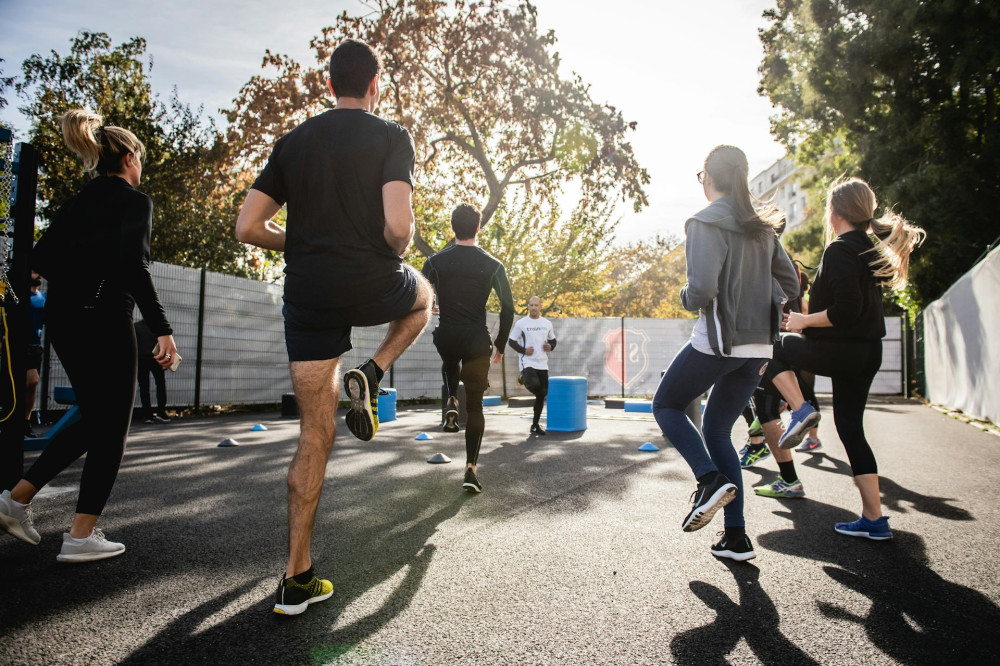
The Energy of Group Training: The Interplay of Music, Instructor, and Community


The Energy of Group Training: The Interplay of Music, Instructor, and Community
There’s something special about working out with others. The music pulses, the instructor motivates, and the collective energy in the room lifts you up—even when your muscles are burning. Group training isn’t just about breaking a sweat; it’s an experience where rhythm, community, and motivation come together. But what exactly makes group fitness so effective and so popular across the United States?
Music as the Driving Force
Music is the heartbeat of most group workouts. It sets the pace, shapes the mood, and helps participants find rhythm in their movements. A great playlist can make even the toughest exercises feel more manageable because the body naturally syncs with the beat.
Research shows that upbeat, rhythmic music can boost endurance and performance by triggering the release of dopamine—the brain’s “feel-good” chemical. That’s why instructors spend time curating playlists that match the intensity of each segment. A calm warm-up calls for a different sound than a high-energy interval session. Whether it’s pop, hip-hop, or electronic dance music, the right soundtrack can transform a workout into a shared, almost euphoric experience.
The Instructor’s Role – More Than a Coach
A skilled instructor is more than someone who demonstrates proper form. They are the spark that ignites the room—creating energy, engagement, and a sense of belonging. The instructor sets the tone through their voice, body language, and ability to read the group.
When an instructor cheers you on with a smile, a shout of encouragement, or a knowing nod that says “you’ve got this,” it’s contagious. Many participants find themselves pushing harder than they thought possible, carried by the instructor’s enthusiasm. It’s a guided community effort, where everyone moves toward the same goal—each at their own pace.
Community as Motivation
At its core, group training is about connection. Standing side by side with others who are sweating through the same challenges creates a unique sense of camaraderie. Whether it’s a spin class, Zumba, yoga, or boot camp, the feeling of being part of something bigger fuels motivation.
For many Americans, group classes become a social anchor in their weekly routine. You start recognizing familiar faces, exchanging smiles, and celebrating small victories together. That sense of accountability makes it easier to show up—even on days when the couch seems more inviting. Studies suggest that social bonds in fitness settings increase the likelihood of sticking with an exercise routine over time.
Læs også:



Variety and Accessibility
Another strength of group training is its variety. There’s a class for nearly every interest and fitness level—from high-intensity interval training to restorative yoga. This diversity allows people to find something that fits their mood, goals, and schedule.
Group classes also remove the guesswork. The instructor has already designed the workout, so all you have to do is show up and follow along. That structure makes it easier for beginners to get started and for busy professionals to stay consistent without having to plan their own routines.
The Mental Dimension
Group training isn’t just physical—it’s deeply mental. The combination of music, movement, and social connection can lift your mood and clear your mind. Many participants leave class feeling lighter, more focused, and less stressed. The endorphins released during exercise, paired with the sense of belonging, help combat anxiety and loneliness.
In a fast-paced American lifestyle, group fitness can serve as a mental reset—a space to let go of daily worries and simply be present in the movement. It’s a reminder that wellness is as much about emotional balance as it is about physical strength.
When Music, Instructor, and Community Unite
The best group workouts happen when all three elements—music, instructor, and community—come together in harmony. The music drives the body, the instructor guides and inspires, and the community provides the strength to keep going. It’s an experience that transcends the physical—a shared energy where everyone gives and receives.
Whether you’re a newcomer or a seasoned athlete, group training offers a way to rediscover the joy of movement. In the end, it’s not just about exercise—it’s about feeling the rhythm, the connection, and the collective energy that make every class something to look forward to.
Læs også: